Crypto Exchange Security in 2026: Red Flags Every Trader Should Watch For

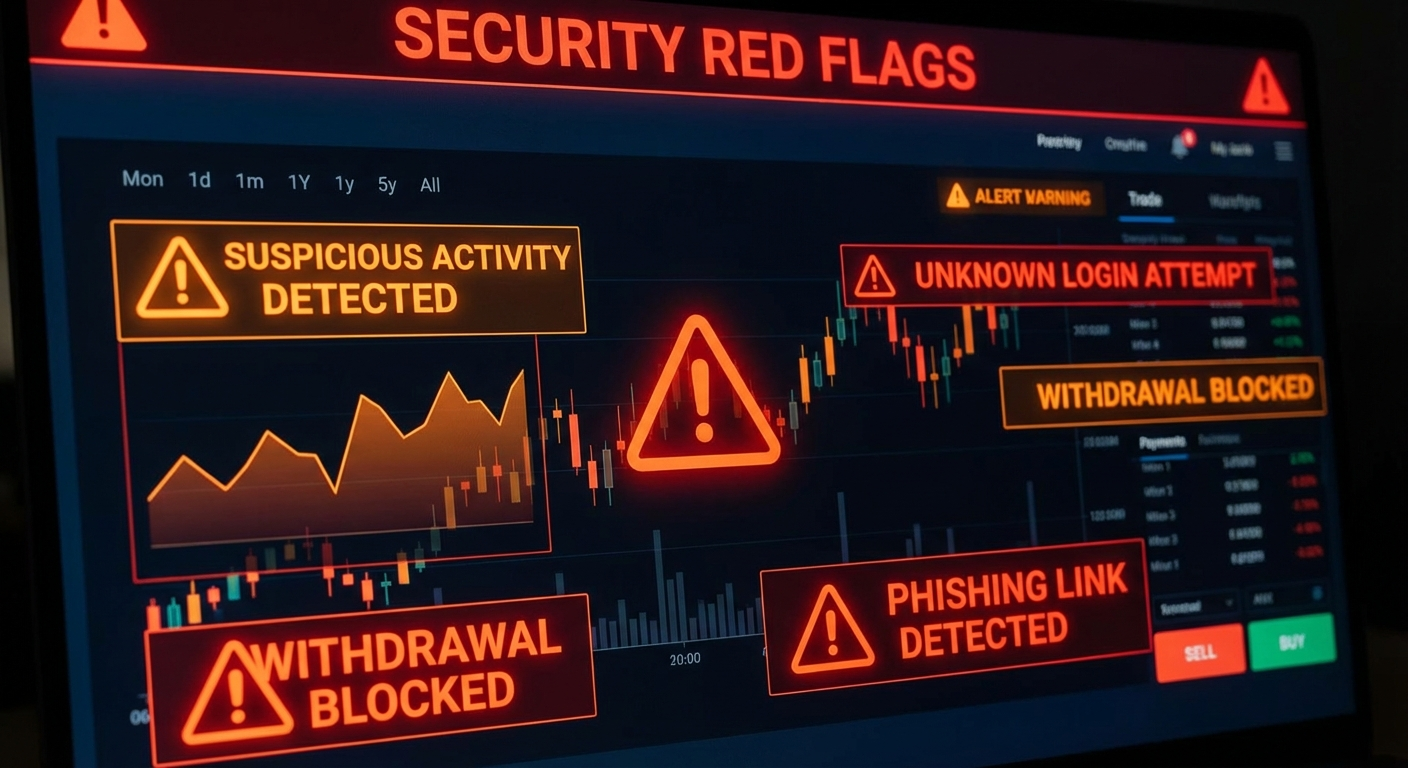
The cryptocurrency landscape in 2026 continues to evolve at breakneck speed, but with innovation comes risk. As digital asset trading becomes mainstream, security vulnerabilities at exchanges pose existential threats to traders' portfolios. Recent incidents, including Coinbase's Polygon network transaction issues and customer data breaches, underscore the critical need for vigilance when choosing and using crypto exchanges.
In this comprehensive guide, we'll explore the red flags every crypto trader must watch for to protect their assets in an increasingly complex threat landscape.
The Current State of Exchange Security in 2026
The crypto industry witnessed unprecedented security challenges throughout 2025, with state-sponsored Advanced Persistent Threats (APTs) and sophisticated cyberattacks targeting major platforms. As we navigate 2026's technical bear market, security experts warn that social engineering attacks leveraging previously leaked customer data will intensify.
The stakes have never been higher. Unlike traditional banking, crypto transactions are irreversible, and the decentralized nature of blockchain means no central authority can reverse fraudulent transfers. This makes exchange security not just important—it's mission-critical.
Recent Case Study: Coinbase's Polygon Network Issues
In December 2025, Coinbase—one of the world's largest and most trusted cryptocurrency exchanges—reported significant issues with Polygon network transactions. Users experienced delayed receives and failed sends when attempting to transact on the Polygon network, highlighting how even tier-one exchanges can encounter operational challenges.
While Coinbase assured users their funds remained secure, this incident reveals several critical lessons:
Infrastructure Scaling Challenges: As exchanges expand to support multiple blockchain networks, maintaining consistent performance across all chains becomes exponentially complex. The Polygon issues demonstrated that multi-chain support creates additional attack surfaces and potential points of failure.
Communication Transparency: Coinbase's immediate disclosure of the issue exemplified proper crisis management. Exchanges that delay or obscure technical problems should raise immediate red flags.
Customer Data Vulnerability: Earlier in May 2025, Coinbase disclosed a customer data security incident resulting in leaked information. This breach created a persistent threat vector, as attackers can weaponize this data for targeted phishing campaigns and social engineering attacks for years to come.
10 Critical Red Flags to Watch For
1. Lack of Regulatory Compliance
In 2026, regulatory compliance isn't optional—it's essential. Exchanges operating without proper licensing in their jurisdictions are red flags waving at maximum velocity.
What to Check:
- Verify the exchange holds licenses from relevant financial authorities (FinCEN in the US, FCA in the UK, etc.)
- Confirm compliance with Know Your Customer (KYC) and Anti-Money Laundering (AML) regulations
- Research whether the exchange has faced regulatory actions or sanctions
Why It Matters: Regulated exchanges undergo regular audits and must maintain certain security standards. Unregulated platforms can disappear overnight with your funds, as countless exit scams have proven.
2. Opaque Ownership and Leadership
Transparency about who controls an exchange is fundamental. Anonymous teams or constantly changing leadership structures suggest potential instability or malicious intent.
Red Flags:
- No clear information about founders and executives
- Leadership with criminal histories or prior involvement in failed crypto projects
- Registered in offshore jurisdictions with minimal disclosure requirements
- Frequent executive turnover, especially in security roles
Best Practice: Research the leadership team's background. Legitimate exchanges proudly showcase their teams, often featuring executives from traditional finance or cybersecurity backgrounds.
3. Inadequate Security Measures
Modern exchanges should implement multiple layers of security. Minimal protections indicate the platform cuts corners—and your funds are at risk.
Essential Security Features:
- Two-factor authentication (2FA) mandatory for all accounts
- Hardware security keys support (FIDO2/WebAuthn)
- Cold storage for the majority of customer funds (80%+ is industry standard)
- Multi-signature wallet architecture
- Regular third-party security audits with published results
- Bug bounty programs encouraging responsible disclosure
- IP whitelisting options
- Anti-phishing codes in official communications
Warning Signs:
- 2FA is optional rather than mandatory
- No information about cold vs. hot wallet ratios
- No published security audits
- History of security breaches without significant infrastructure improvements
4. Unrealistic Promises and Returns
If it sounds too good to be true, it absolutely is. Exchanges promising guaranteed returns, "risk-free" trading, or abnormally high staking rewards are typically Ponzi schemes in disguise.
Specific Red Flags:
- Staking yields significantly higher than established platforms
- "Guaranteed" returns on trading activities
- Referral programs offering unsustainable commissions
- Marketing focused on recruitment rather than technology
Reality Check: Legitimate platforms clearly communicate risks. Cryptocurrency markets are volatile, and any platform claiming otherwise is either incompetent or fraudulent.
5. Poor Customer Support and Communication
When issues arise—and they will—responsive customer support can mean the difference between a minor inconvenience and catastrophic loss.
Warning Signs:
- No live customer support options
- Ticket response times exceeding 48-72 hours
- Generic, unhelpful responses to technical questions
- No clear escalation path for urgent security issues
- Absence of official communication channels (blog, status page, social media)
Test Before You Trust: Submit a low-priority support ticket before depositing significant funds. The quality and speed of response will tell you everything you need to know.
6. Suspicious Trading Activity and Liquidity
Fake volume and wash trading plague the crypto industry. Exchanges artificially inflating trading volumes create the illusion of liquidity that evaporates when you need it most.
How to Detect:
- Compare reported volumes with third-party analytics (CoinGecko, Messari, CoinMarketCap Trust Score)
- Check bid-ask spreads—wide spreads indicate limited real liquidity
- Monitor order books for patterns suggesting automated wash trading
- Research whether the exchange has been caught manipulating volumes
Impact: Low real liquidity means you can't exit positions at expected prices during volatility, potentially trapping you in losing trades.
7. Withdrawal Restrictions and Delays
Arbitrary withdrawal limits, unexpected holds, or frequent "maintenance windows" preventing withdrawals are massive red flags often preceding exchange insolvency.
Normal vs. Suspicious:
Normal:
- KYC-based tiered withdrawal limits clearly stated in terms of service
- 24-hour security holds on first-time addresses
- Scheduled maintenance announced well in advance
Suspicious:
- Sudden reduction in withdrawal limits without explanation
- Frequent unscheduled maintenance affecting withdrawals specifically
- Requirements to complete complex tasks before processing withdrawals
- Delays exceeding stated processing times repeatedly
- Different rules for different users with no transparent criteria
Critical Action: Regularly test withdrawals with small amounts. Don't wait until you need to move significant funds to discover problems.
8. Lack of Proof of Reserves
Post-FTX collapse, proof of reserves has become an industry standard for trustworthy exchanges. Platforms refusing to provide cryptographic proof of their holdings should be avoided entirely.
What to Look For:
- Regular (ideally real-time) proof of reserves published
- Third-party audit verification of reserves
- Merkle tree proofs allowing individual users to verify their balance inclusion
- Transparency about liabilities, not just assets
Why It's Critical: Proof of reserves ensures the exchange actually holds the assets it claims, preventing fractional reserve practices that led to FTX's implosion.
9. Inconsistent or Absent Security Incident Disclosure
How an exchange responds to security incidents reveals its character. Platforms that hide breaches or downplay their severity cannot be trusted.
Evaluate Their Track Record:
- Have they experienced security breaches? (Most have, eventually)
- How quickly did they disclose incidents to users?
- What concrete remediation steps did they implement?
- Were affected users compensated appropriately?
- Did they publish post-mortem analyses?
Red Flag Pattern: Exchanges discovering breaches months after they occurred, or learning about their own security incidents from third parties, demonstrate unacceptable security monitoring gaps.
10. Pressure Tactics and Artificial Urgency
Legitimate exchanges never pressure users into rushed decisions. Tactics creating artificial urgency are manipulation designed to bypass your rational decision-making.
Common Pressure Tactics:
- Limited-time offers requiring immediate large deposits
- "VIP" programs requiring upfront commitments
- Bonuses that lock funds for extended periods
- Threats that "this opportunity won't last"
- Referral pressure from existing users (pyramid scheme indicator)
Healthy Approach: Take your time. Research thoroughly. Test with small amounts before committing serious capital.
Advanced Security Practices for 2026
Beyond watching for red flags, proactive security measures significantly reduce your risk profile:
Diversify Exchange Exposure
Never keep all funds on a single exchange. Distribute assets across multiple reputable platforms and prioritize self-custody through hardware wallets for long-term holdings.
Use Exchange-Specific Email Addresses
Create unique email addresses for each exchange. This practice limits exposure if one platform suffers a data breach and enables you to identify phishing attempts immediately.
Enable All Available Security Features
- Use authenticator apps (Authy, Google Authenticator) instead of SMS-based 2FA
- Implement hardware security keys where supported
- Set up withdrawal address whitelists
- Configure anti-phishing codes
- Use VPN when accessing exchanges, especially on public networks
Monitor for Anomalous Activity
- Set up email/app notifications for all login attempts
- Review API key permissions regularly (disable if unused)
- Check login history frequently
- Monitor withdrawal addresses for unauthorized additions
Stay Informed About Emerging Threats
The threat landscape evolves constantly. Follow reputable crypto security researchers, subscribe to exchange security bulletins, and join community forums where users share experiences and warnings.
The Coinbase Lessons: What Established Exchanges Can Teach Us
Despite being a publicly-traded, heavily regulated exchange, Coinbase's 2025 challenges demonstrate that no platform is immune to problems:
Multi-Chain Complexity: Supporting numerous blockchains creates operational challenges that can affect user experience and potentially security.
Data Breach Persistence: Customer data compromised in May 2025 will remain a threat vector for years, as attackers refine social engineering approaches using that information.
Transparency as Competitive Advantage: Coinbase's open communication about issues, while potentially damaging short-term reputation, builds long-term trust.
Infrastructure Debt: Rapid expansion can create technical debt that manifests as transaction failures, demonstrating that growth must be balanced with robust infrastructure investment.
Questions to Ask Before Choosing an Exchange
Before depositing funds, get satisfactory answers to these critical questions:
- Where is the exchange legally registered and regulated?
- What percentage of user funds are held in cold storage?
- When was the last third-party security audit, and can I review the results?
- Does the exchange provide proof of reserves?
- What is the exchange's incident response history?
- What insurance coverage protects user funds?
- How does the exchange handle disputes and errors?
- What are the exact withdrawal limits and processing times?
- Can I test a small withdrawal before committing large amounts?
- Does the exchange have a clear, accessible customer support system?
Red Flags Specific to Emerging Markets
If trading in emerging markets or with regional exchanges, additional scrutiny is essential:
- Local Regulatory Environment: Understand local crypto regulations and whether they protect consumers
- Banking Relationships: Frequent changes in banking partners suggest instability
- Fiat On/Off-Ramp Reliability: Test small deposits and withdrawals of local currency
- Community Reputation: Research local crypto communities for warnings and experiences
- Translation Quality: Poor English translations may indicate lack of resources for international users
The Psychology of Exchange Selection
Understanding cognitive biases that affect exchange selection protects you from poor decisions:
Availability Bias: Exchanges with aggressive marketing appear safer due to familiarity, despite potentially lacking substance.
Herd Mentality: "Everyone uses it" doesn't mean it's secure. FTX was widely popular before its collapse.
Sunk Cost Fallacy: Don't stay on a problematic exchange because you've already invested time in setting it up. Cut losses and migrate.
Recency Bias: Recent good performance doesn't erase historical red flags or predict future security.
When to Immediately Withdraw All Funds
Certain situations demand immediate action—withdraw everything and ask questions later:
- Sudden changes in terms of service, especially regarding liability
- Executive departures, particularly the CEO, CFO, or CISO
- Unexplained trading halts or withdrawal freezes
- Regulatory investigations or enforcement actions
- Significant unplanned downtime
- Reports of insolvency or liquidity issues
- Merger or acquisition announcements (until clarity emerges)
- Data breaches affecting your account
- Unauthorized withdrawal attempts or successful unauthorized access
The Future of Exchange Security
As 2026 progresses, expect these security trends:
Zero-Knowledge Proofs: Enhanced privacy while maintaining regulatory compliance through ZK-proof verification.
Decentralized Identity: Self-sovereign identity solutions reducing exchange-held personal data.
On-Chain Insurance: Smart contract-based insurance products protecting against exchange failures.
Regulatory Harmonization: Increasing global coordination on crypto regulation, creating clearer security standards.
AI-Powered Threat Detection: Machine learning systems identifying and preventing sophisticated attacks in real-time.
Conclusion: Security is Your Responsibility
The Coinbase Polygon issues and customer data breach of 2025 remind us that even the most established exchanges face security challenges. While platforms bear responsibility for protecting user funds, ultimate security responsibility rests with you.
By watching for the red flags outlined in this guide, implementing robust personal security practices, and maintaining healthy skepticism, you can navigate the crypto exchange landscape with significantly reduced risk.
Remember: In cryptocurrency, trust must be earned continuously, never assumed. Verify everything, question everyone, and never invest more than you can afford to lose.
The exchanges that will survive and thrive in 2026 and beyond are those that prioritize security transparency, regulatory compliance, and user protection over rapid growth and profit maximization. Choose wisely, monitor constantly, and always be prepared to walk away.
Your financial security in the crypto ecosystem depends not on finding the perfect exchange—because none exists—but on maintaining vigilance, diversification, and personal responsibility for your digital assets.