North Korea's $2 Billion Crypto Crime Spree: How the Lazarus Group Became the World's Most Dangerous Hackers

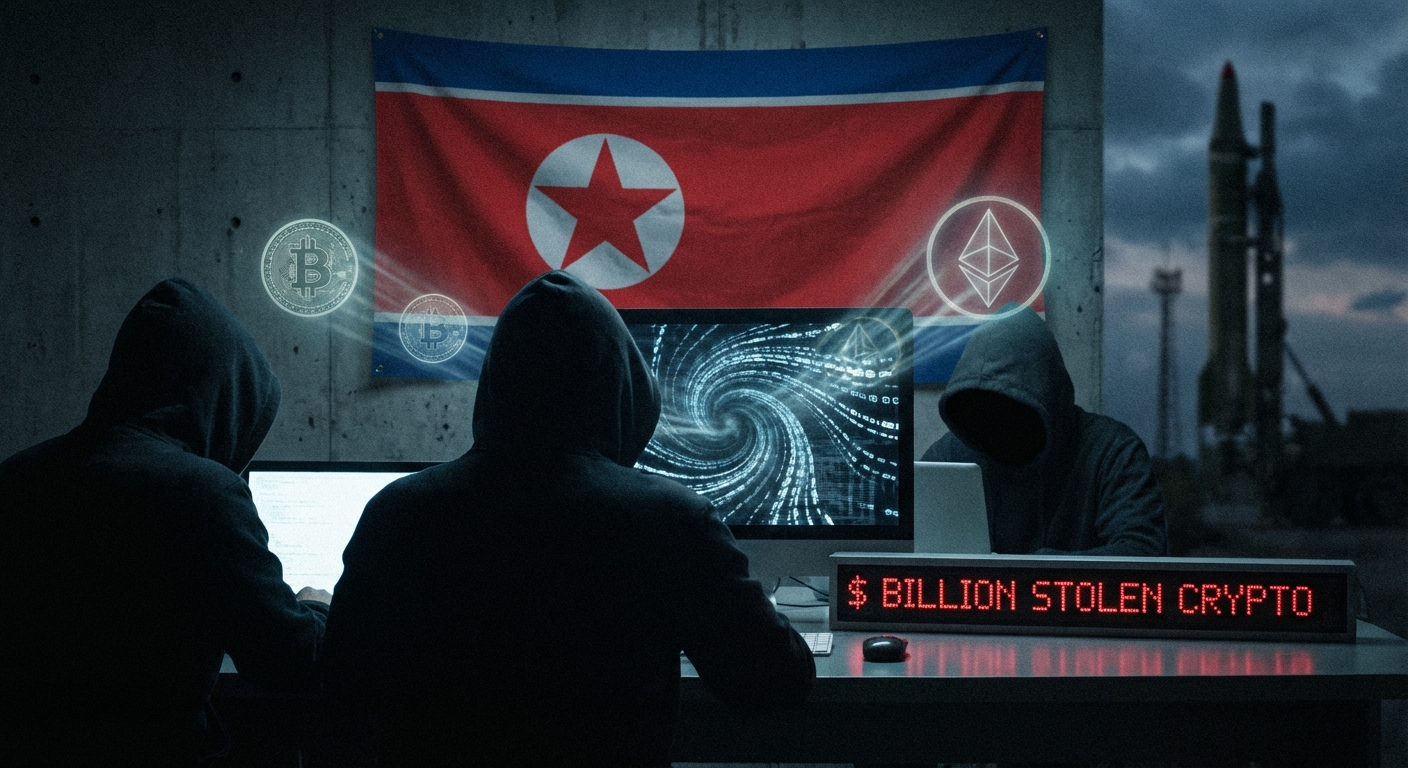
The Hermit Kingdom's cybercrime operations now fund nuclear weapons, dwarf legitimate trade, and account for 76% of all cryptocurrency exchange compromises worldwide.
Executive Summary
In 2025, North Korean state-sponsored hackers executed the most devastating year of cryptocurrency theft ever recorded. According to Chainalysis's Crypto Crime Report, threat actors linked to Pyongyang stole at least $2.02 billion in digital assets—a staggering 51% increase from the $1.3 billion pilfered in 2024. The regime's cumulative crypto theft since 2017 now exceeds $6.75 billion.
This isn't merely criminal activity. It's an economic lifeline for a nuclear-armed pariah state. With international sanctions strangling conventional trade, North Korea has transformed cryptocurrency theft into a primary revenue stream—one that United Nations monitors estimate now constitutes approximately 13% of the nation's GDP.
The February 2025 Bybit hack alone netted $1.5 billion, making it the single largest cryptocurrency theft in history. Behind these attacks sits the Lazarus Group, North Korea's elite hacking unit affiliated with the Reconnaissance General Bureau (RGB), Pyongyang's primary intelligence agency. Their methods have evolved from opportunistic smash-and-grab operations to sophisticated, state-backed funding campaigns that challenge the security assumptions of even the most well-defended platforms.
The Anatomy of State-Sponsored Crypto Crime
The Lazarus Group: North Korea's Cyber Cash Cow
The Lazarus Group isn't a typical criminal hacking collective. It's a military intelligence operation, directly controlled by North Korea's RGB. Since emerging in the early 2010s, Lazarus has demonstrated capabilities that rival those of major nation-state cyber programs—because that's exactly what it is.
The group operates multiple specialized units, each with distinct tactics:
TraderTraitor (Jade Sleet / Slow Pisces): This subgroup specializes in supply chain compromises and was responsible for the record-breaking Bybit hack. Their playbook involves infiltrating software dependencies used by cryptocurrency platforms, then exploiting that access for maximum financial extraction.
Operation Dream Job: A long-running campaign targeting employees in defense, aerospace, chemical, manufacturing, and technology sectors. Operatives pose as recruiters on LinkedIn and WhatsApp, luring victims with lucrative job opportunities. The "job offers" deliver malware payloads including BURNBOOK, MISTPEN, and BADCALL, enabling network infiltration and data theft.
Wagemole (IT Worker Scheme): Perhaps the most insidious operation, Wagemole plants North Korean IT workers in Western companies under false identities. These operatives collect regular salaries while simultaneously providing access for larger compromise operations.
2025's Record-Breaking Attacks
The scale of 2025's theft campaign is unprecedented. Key incidents include:
Bybit Exchange (February 2025) — $1.5 Billion
The single largest cryptocurrency heist in history. FBI investigators confirmed Lazarus Group attribution in August 2025. Analysis by Hudson Rock linked the attack to infrastructure using the email address "trevorgreer9312@gmail.com"—a digital fingerprint traced to a machine infected with Lumma Stealer malware. The attack exploited vulnerabilities in SafeWallet's supply chain, demonstrating how DPRK hackers increasingly target trusted third-party software rather than exchanges directly.
Upbit Exchange (November 2025) — $36 Million
South Korea's largest cryptocurrency exchange fell victim to Lazarus in a breach that underscored how even well-resourced platforms in heightened threat environments remain vulnerable. South Korean authorities have attributed the attack to North Korean actors.
WOO X (July 2025) — $14 Million
Nine individual users lost funds in this targeted attack, illustrating the shift toward high-net-worth individuals rather than exclusively institutional targets.
BitoPro (Taiwan, May 2025) — $11.5 Million
Taiwan's leading exchange joined the growing list of Asian platforms compromised by North Korean hackers.
Seedify — $1.2 Million
Smaller-scale attacks continue alongside billion-dollar heists, demonstrating Lazarus's capacity for simultaneous multi-target operations.
According to Elliptic researchers, the highest theft from a single individual in 2025 reached $100 million, highlighting how crypto whales with inadequate personal security have become attractive targets.
The Money Laundering Machine
Stealing cryptocurrency is only half the challenge. Converting billions in stolen tokens to usable currency without detection requires sophisticated laundering infrastructure—and North Korea has built exactly that.
The Three-Wave Laundering Protocol
Chainalysis analysis reveals that stolen DPRK funds follow a structured, multi-wave laundering pathway spanning approximately 45 days:
Wave 1: Immediate Layering (Days 0-5)
Within hours of a theft, stolen funds begin moving through DeFi protocols and mixing services. The goal is immediate distancing from the theft source. Funds are fragmented across dozens of wallets, obscuring the connection to the original crime.
Wave 2: Initial Integration (Days 6-10)
The fragmented funds shift to cryptocurrency exchanges, second-tier mixing services, and cross-chain bridges. XMRt (Monero) conversions are particularly favored for their enhanced privacy features. This phase creates multiple additional layers between the theft and eventual extraction.
Wave 3: Final Integration (Days 20-45)
The final phase involves conversion to fiat currency or other tangible assets. Services facilitating this include Chinese-language money movement operations, over-the-counter (OTC) traders, and specialized marketplaces like Huione.
Tornado Cash and the Mixer Ecosystem
The August 2025 conviction of Tornado Cash co-founder Roman Storm for unlicensed money transmission and sanctions violations marked a critical moment in the cat-and-mouse game between law enforcement and laundering infrastructure.
Tornado Cash, an Ethereum-based mixing protocol, had processed billions in illicit funds for North Korean hackers. The U.S. Treasury's Office of Foreign Assets Control (OFAC) sanctioned the protocol in 2022, but enforcement proved challenging until Storm's prosecution demonstrated criminal liability for protocol developers.
Despite this victory, DPRK actors continue adapting. They've pivoted to:
- Alternative mixing services operating beyond U.S. jurisdiction
- Cross-chain bridges that enable movement between blockchains
- Privacy coins like Monero that offer built-in anonymity
- Peer-to-peer transactions in emerging markets with limited regulatory oversight
- Decentralized finance (DeFi) protocols that operate without centralized control
The China Connection
Chainalysis findings reveal that DPRK threat actors are "tightly integrated with illicit actors across the Asia-Pacific region," relying heavily on professional Chinese-language money laundering services. This includes:
- OTC traders who convert crypto to cash outside regulated exchanges
- Money movement and guarantee services that facilitate cross-border transfers
- Huione and similar marketplaces specializing in moving illicit funds
This relationship reflects Pyongyang's historical use of China-based networks to circumvent international financial sanctions—now adapted for the cryptocurrency era.
The IT Worker Infiltration Campaign
Beyond dramatic exchange heists, North Korea operates a more subtle but equally concerning revenue stream: placing fake IT workers in Western companies.
How the Scheme Works
A Wired investigation uncovered over 1,000 email accounts linked to North Korean IT workers employed remotely by Western companies. The operation works on multiple levels:
- Identity Fraud: Workers assume stolen or fabricated Western identities, complete with fake credentials and employment histories.
- Front Companies: Entities like DredSoftLabs and Metamint Studio serve as intermediaries, providing apparent legitimacy for job placements.
- Salary Diversion: Regular paychecks flow into cryptocurrency wallets, then through the same laundering infrastructure used for larger thefts.
- Access Provision: Some IT workers provide privileged access enabling larger compromises of crypto services.
Escalating Recruitment Tactics
Security Alliance reported in late 2025 that DPRK-linked actors are increasingly operating as recruiters themselves, targeting freelancers on platforms like Upwork and Freelancer:
"These recruiters approach targets with a scripted pitch, requesting 'collaborators' to help bid on and deliver projects. They provide step-by-step instructions for account registration, identity verification, and credential sharing."
Victims ultimately surrender full access to their freelance accounts or install remote-access tools like AnyDesk or Chrome Remote Desktop. This enables North Korean operators to work under the victim's verified identity, bypassing platform controls entirely.
Real Consequences
In December 2025, Minh Phuong Ngoc Vong, a 40-year-old Maryland man, was sentenced to 15 months in prison for allowing North Korean nationals in Shenyang, China, to use his identity for employment at U.S. companies—including a contract at the Federal Aviation Administration.
Between 2021 and 2024, Vong was paid more than $970,000 for software development work actually performed by overseas conspirators. Four North Korean nationals were separately indicted in Georgia for similar schemes, having infiltrated U.S. firms as IT contractors and stolen nearly $900,000.
Nuclear Weapons: Where the Money Goes
The cryptocurrency thefts would be concerning regardless of destination. Their actual purpose makes them existential: funding North Korea's nuclear weapons and ballistic missile programs.
The Sanctions Evasion Strategy
International sanctions on North Korea are among the most comprehensive ever imposed. Trade restrictions, financial exclusions, and asset freezes have decimated conventional economic activity. The regime's response has been to build an alternative economy—one built substantially on cybercrime.
A June 2025 UN sanctions panel report concluded bluntly:
"Cybercriminal activities generate about half of North Korea's foreign currency income and are used to fund its weapons programs."
The Financial Action Task Force (FATF) warning in June 2025 designated North Korea as "the most severe state-based threat to the integrity of crypto markets."
From Bits to Bombs
The connection between cryptocurrency theft and weapons development is direct. UN monitors have documented how cyber proceeds fund:
- Nuclear weapons research and production
- Ballistic missile development programs
- Proliferation networks supplying weapons technology
- Procurement of sanctioned materials through front companies
The U.S. Department of Justice stated plainly: "These funds enable DPRK's malign activities worldwide, undermining sanctions and fueling proliferation."
This transforms cryptocurrency security from a financial issue into a national security imperative. Every dollar stolen by Lazarus potentially contributes to nuclear weapons that threaten regional and global stability.
The Enforcement Challenge
Despite unprecedented attribution capabilities and coordinated international response, stopping North Korea's crypto crime campaign remains extraordinarily difficult.
Attribution Advances
Blockchain intelligence firms like Chainalysis and Elliptic have developed sophisticated pattern recognition that identifies DPRK-linked transactions with high confidence. The public blockchain provides an immutable record of fund movements, enabling investigators to trace stolen assets across wallets, exchanges, and protocols.
The FBI's August 2025 confirmation of Lazarus Group attribution for the Bybit hack demonstrated that attribution is no longer the limiting factor.
Enforcement Gaps
The real challenge is intervention. Consider the obstacles:
Jurisdictional Limits: North Korea operates beyond the reach of any extradition treaty. Individual hackers cannot be arrested. Front companies operate in jurisdictions with limited cooperation.
Speed Mismatch: Stolen cryptocurrency moves through dozens of wallets within hours. Legal processes operate on timelines measured in months. By the time seizure orders are obtained, funds have long since been laundered.
Regulatory Fragmentation: Different countries maintain vastly different approaches to cryptocurrency regulation. Funds easily flow from well-regulated jurisdictions to those with minimal oversight.
DeFi Challenges: Decentralized protocols have no operator to subpoena, no compliance department to issue freeze orders, no central point of intervention.
Recovery Efforts
The U.S. Department of Justice has pursued aggressive forfeiture actions. A June 2025 filing sought to seize $7.74 million linked to North Korean laundering schemes. While meaningful, such amounts represent a small fraction of overall theft.
The Tornado Cash conviction signals willingness to pursue protocol developers, but most laundering infrastructure operates in jurisdictions beyond U.S. reach.
What the Industry Must Do
The cryptocurrency industry faces an uncomfortable reality: it has become the primary funding mechanism for a nuclear weapons program. Addressing this requires coordinated action across exchanges, protocol developers, and individual users.
For Exchanges and Custodians
1. Supply Chain Security: The Bybit hack exploited SafeWallet dependencies rather than Bybit systems directly. Rigorous third-party security audits, software bill of materials tracking, and dependency monitoring are now essential.
2. Employee Vetting: The IT worker scheme means HR departments are now security functions. Enhanced identity verification, including video interviews and credential verification, can identify imposters.
3. Real-Time Threat Intelligence: Subscription to blockchain intelligence services enables immediate identification of funds from known DPRK addresses. Automated flagging and hold procedures should trigger on detected exposure.
4. Multi-Signature Requirements: Large transactions should require multiple independent signatories, limiting the impact of individual compromise.
5. Cold Storage Discipline: Assets not required for immediate liquidity belong in cold storage with air-gapped signing procedures.
For DeFi Protocols
1. OFAC Compliance: Protocols should maintain blocking lists for sanctioned addresses. While decentralization complicates enforcement, front-end interfaces can implement address screening.
2. Rate Limiting: Unusual transaction volumes should trigger delays, providing time for intervention before large-scale laundering completes.
3. Transparency Reports: Regular publication of volume analysis and suspicious activity metrics demonstrates good faith and aids attribution.
For High-Net-Worth Individuals
1. Hardware Wallets: Self-custody using hardware wallets with transaction verification displays prevents many remote attack vectors.
2. Social Engineering Awareness: "Job offers" arriving via LinkedIn or WhatsApp warrant extreme skepticism. DPRK operatives are sophisticated; too-good-to-be-true opportunities usually are.
3. Multisig Personal Holdings: Even individual wallets can require multiple signatures, distributed across devices and locations.
4. Professional Security Services: Individuals holding significant crypto assets should consider professional security audits and monitoring.
For Regulators and Law Enforcement
1. International Coordination: Cryptocurrency crime requires international enforcement cooperation. Information sharing agreements and joint investigation frameworks should be expanded.
2. Mixer Regulation: The Tornado Cash precedent should inform consistent approaches to mixer protocols globally.
3. Exchange Licensing Standards: Minimum security requirements for exchange licensing can raise the industry baseline.
Conclusion: A Geopolitical Reckoning
North Korea's $2.02 billion cryptocurrency theft campaign in 2025 represents more than a financial crime wave. It demonstrates how a sanctioned state can weaponize decentralized technology to fund weapons of mass destruction.
The Lazarus Group has evolved from opportunistic criminals to the world's most sophisticated state-sponsored financial hackers. Their methods—supply chain attacks, IT worker infiltration, advanced social engineering—challenge security assumptions that much of the cryptocurrency industry still relies upon.
For the industry, 2025 should serve as a wake-up call. The ecosystem that enabled permissionless financial innovation has also enabled a nuclear weapons program. Addressing this will require uncomfortable trade-offs between decentralization ideals and security realities.
For policymakers, the challenge is equally daunting. Traditional enforcement mechanisms struggle against adversaries who cannot be extradited, using protocols that cannot be subpoenaed, moving funds that cannot be frozen quickly enough.
For all of us, the stakes extend beyond finance. Every successful DPRK crypto heist potentially contributes to nuclear weapons that threaten millions of lives. In this light, cryptocurrency security is no longer merely an industry concern—it's a matter of international security.
The $6.75 billion already stolen cannot be recovered. What happens with the next $6.75 billion depends on decisions being made today.
This investigation was produced by Crypto Impact Hub's threat intelligence team. Data sourced from Chainalysis, Elliptic, FBI advisories, DOJ filings, and UN sanctions panel reports.